
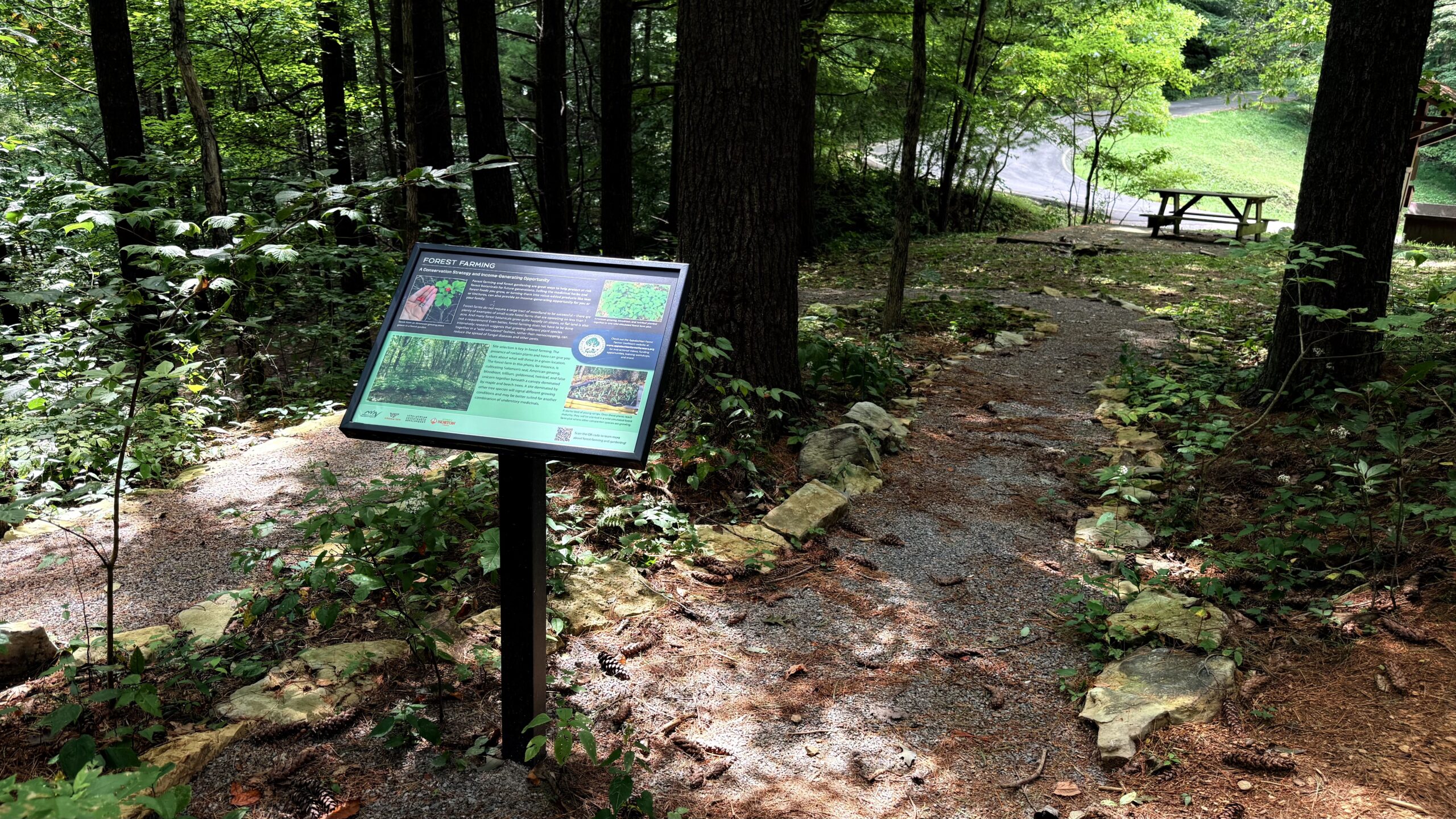
Demonstration Forest Garden
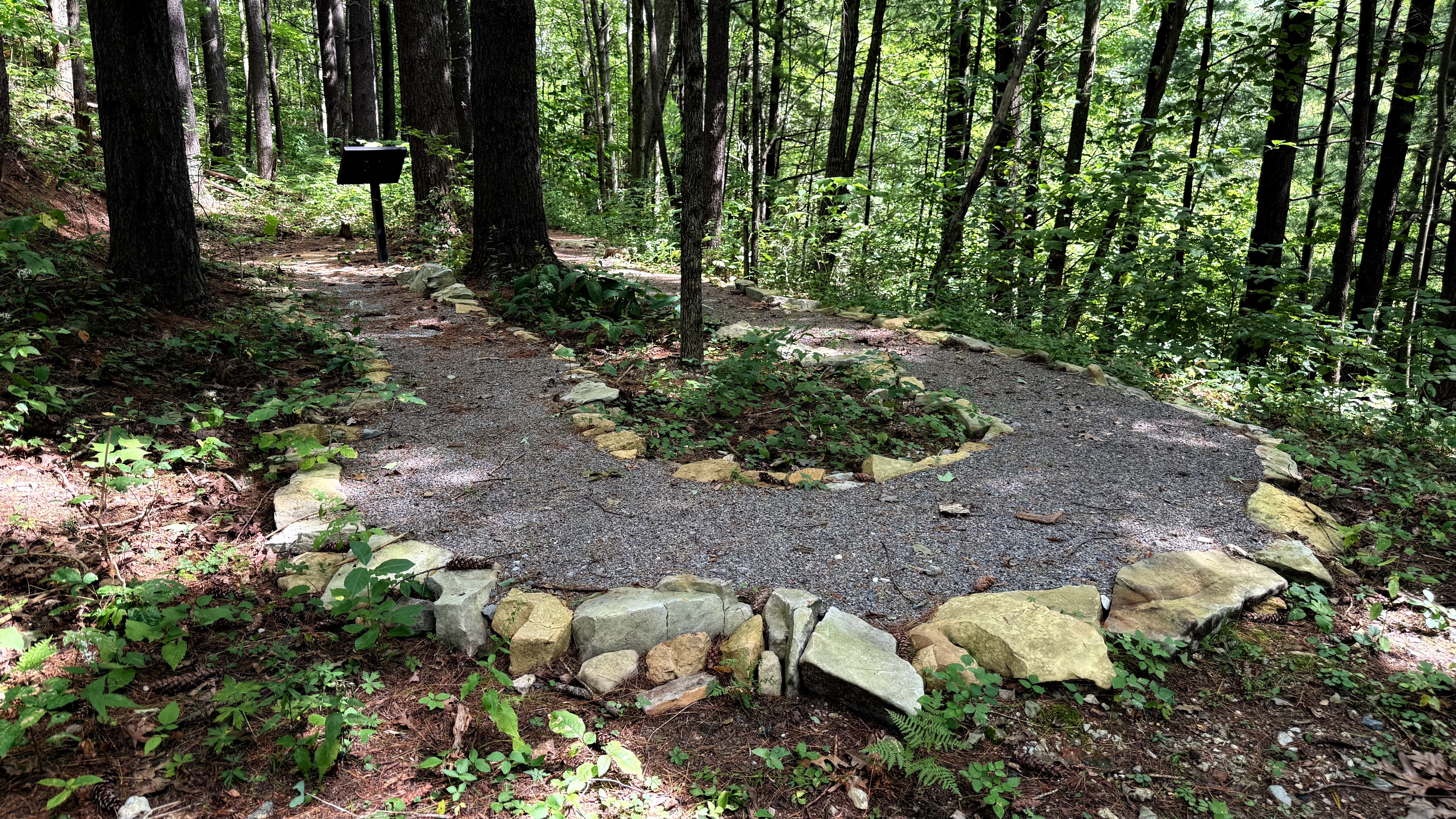
Planted behind the final sign on the Storywalk Trail, the monument’s forest garden was planted to showcase wild-simulated forest farming techniques.
Forest farms do not require large tracts of woodlands to be successful—there are plenty of examples of small-scale forest farms that are operating on less than one acre. Forest farming does not have to be done intensively, either; research suggests that growing different plant species together in a “wild-simulated” fashion, rather than monocropping, can reduce the spread of fungal diseases and other pests
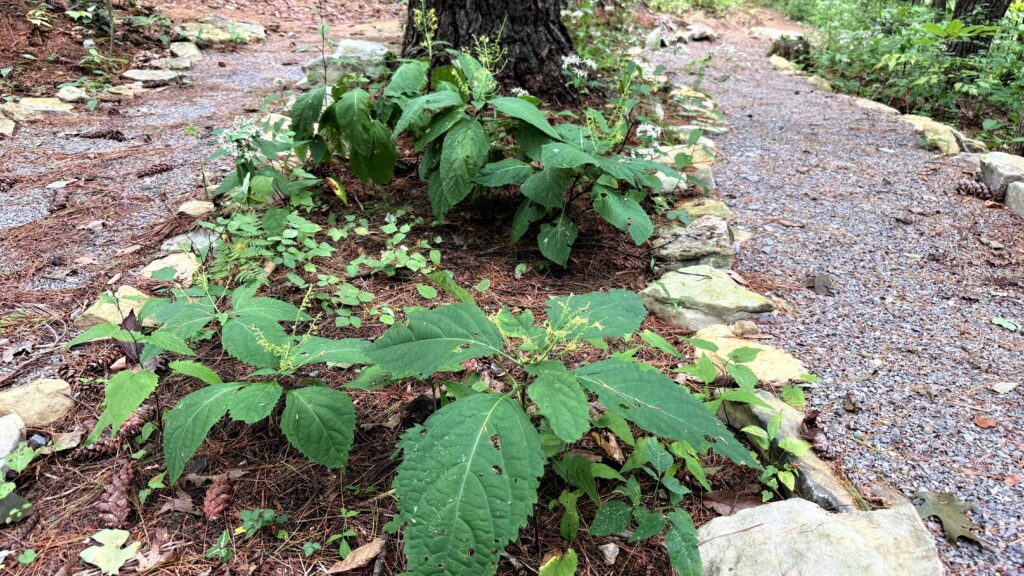
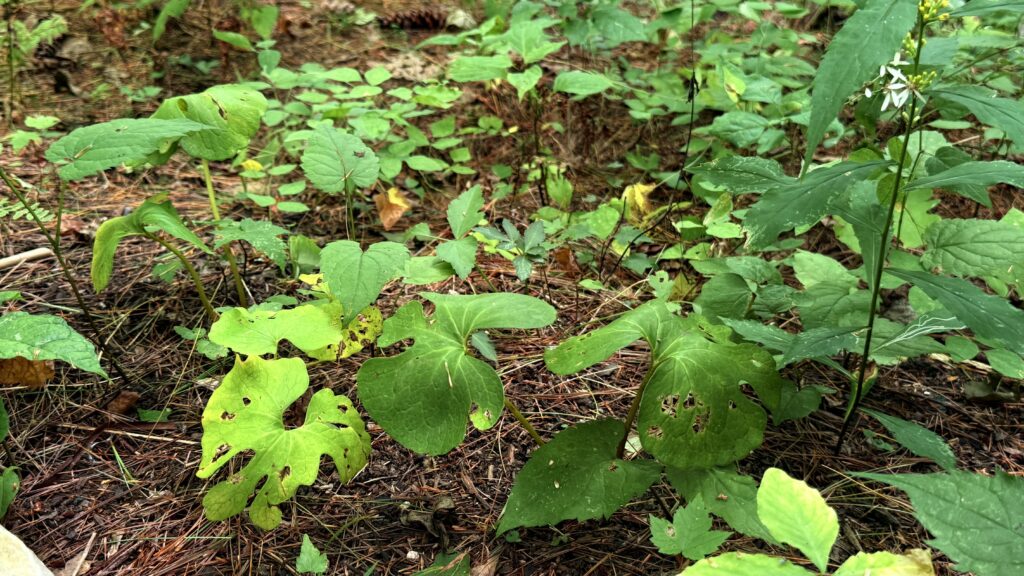
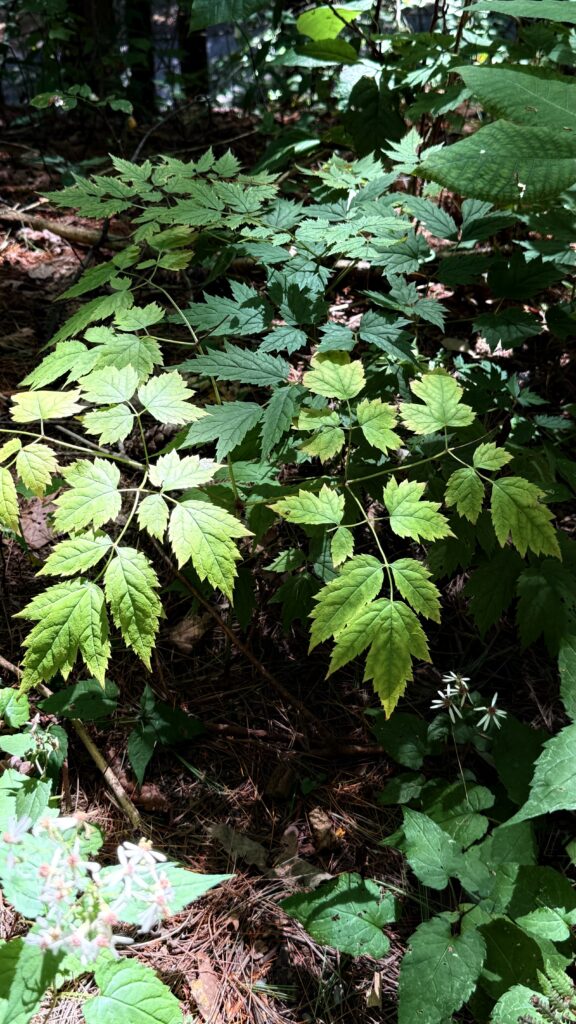
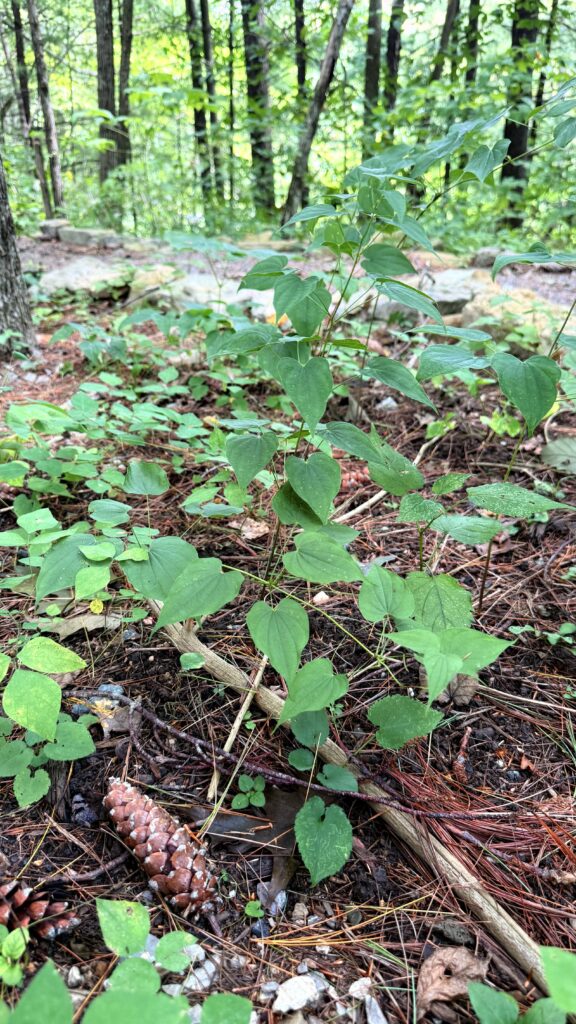
Appalachian Sustainable Development took the lead on sourcing the planting stock, which the team and advisory board agreed should be sourced as locally as possible. Paul Michael Combs, a Wild Stewards Alliance-certified harvester and aspiring new forest farmer, provided 60 roots total of wild geranium (Geranium maculatum), black cohosh (Actaea racemosa), wild yam (Dioscorea villosa), stoneroot (Collinsonia canadensis), goldenseal (Hydrastis canadensis), Solomon’s seal (Polygonatum biflorum), and bloodroot (Sanguinaria canadensis)
Other sources of planting stock included seeds of sochan (Rudbeckia laciniata), Solomon’s seal (Polygonatum biflorum), spicebush (Lindera benzoin), and American ginseng (Panax quinquefolius).

The Forest Botanicals Region Living Monument is a project of the Forest Botanicals Region Social Ecology Lab at Virginia Tech and Appalachian Sustainable Development, in partnership with the City of Norton, Virginia. This project was made possible by the generous support of the Mellon Foundation/ Monuments Across Appalachian Places.